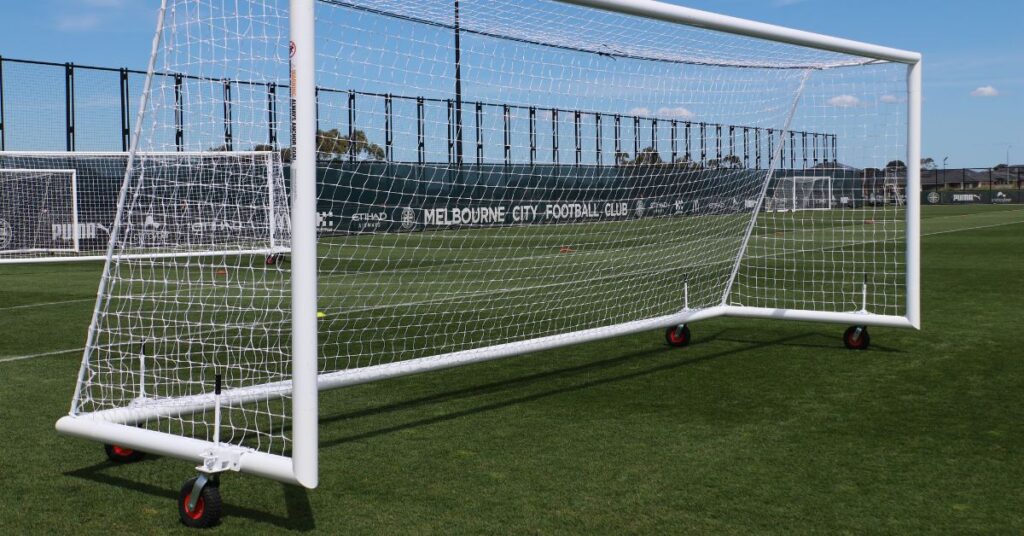
Melbourne City FC and Abel Sports have designed and engineered an innovative new 360-degree wheel system for portable soccer goals that makes it quicker, easier and safer to move them around the grounds. The new wheel kit will now be made available to all Abel customers.
In a high-performance football environment, portable goals rarely stay in the one place. At Melbourne City FC, the goals need to be moved continually, not just around the pitch but to different grounds as well.
Better Wheels to Get Goals Through Gates
This is where the idea for a 360-degree wheel first came from said Eugene Mott, product installer for Abel Sports. “Standard portable soccer goal wheels only allow the goals to move in one direction. That’s a problem because a full-size set of goals is 7.3 metre wide but maintenance gates are typically just 3 to 5 meters wide. For Melbourne City this was a big problem. Lifting them over fences was a real pain point for them, literally.”
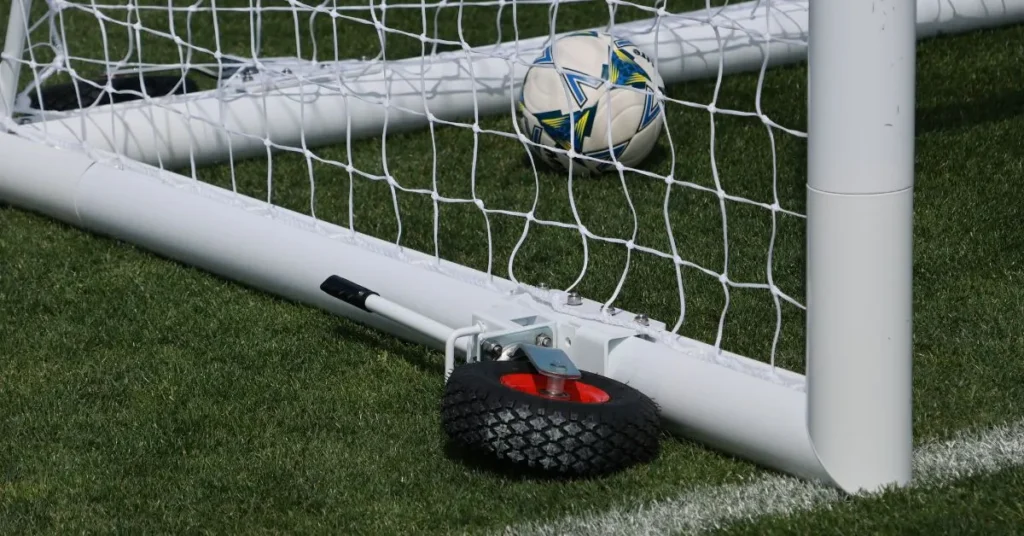
Ian Wilson, Senior Project Manager at New York City FC first raised the issue with Abel Sports in 2018. “From the outset, the operational benefit was clear. Portable goals need to be easy and safe to manoeuvre, particularly in busy sporting environments.”
Unlike conventional wheels, the 360-degree wheel kit allows a portable goal to turn and move in any direction, giving grounds staff much more control and flexibility. “The ability to turn the goals and move them laterally makes a meaningful difference,” Ian said. “It allows the goals to be aligned and guided through gates, access points, storage areas and other constrained spaces without the awkward handling normally associated with large portable goals.”
Engineered For Performance
Abel’s local design and engineering team based in Sunshine in Melbourne’s West began designing the 360-degree wheel system in 2019. A series of prototypes were developed and rigorously tested at Melbourne City FC’s high-performance Casey Fields training facility. “We knew that if it could perform for Melbourne City it could perform for anyone,” said John. “That’s part of the reason why we value our partnership with them so much and why we have such a close working relationship.”
For Melbourne City FC Grounds Manager Danny Levick, the requirements were clear for the outset. “The key objectives were manoeuvrability, stability, durability and ease of operation,” Danny said. “We wanted a wheel system that would allow staff to move goals efficiently in any direction without excessive physical effort.”
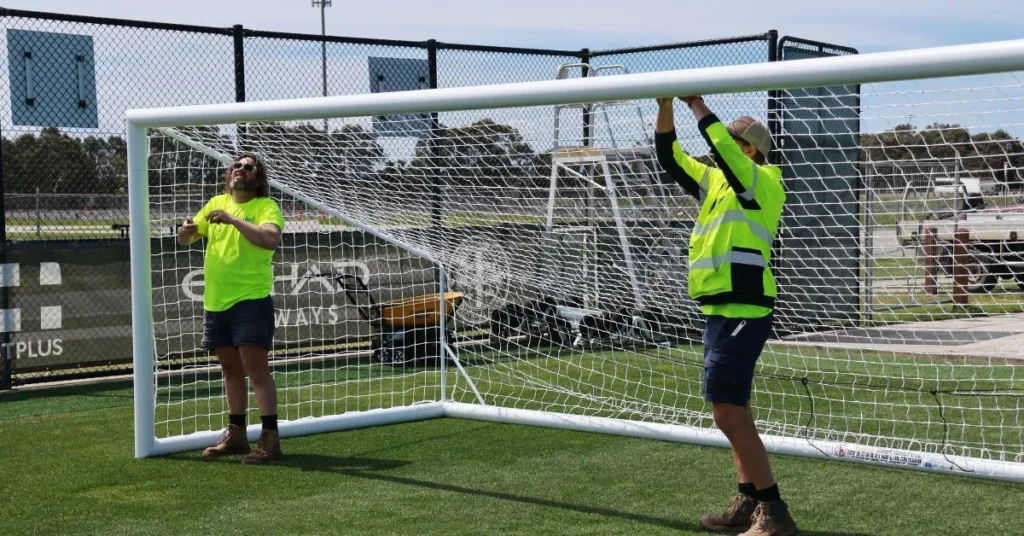
The system also had to be engineered to last. “A portable goal in our environment needs to withstand constant daily use across multiple training sessions and field setups,” Danny said. “They need to be robust enough to handle regular transportation, stable and secure during training, and simple for staff to reposition quickly and safely without disrupting session schedules.”
Melbourne City FC worked closely with Abel throughout the product development process, providing feedback and valuable insights based on real-world use in a live training environment. Early discussions focused on manoeuvrability and stability, with the club later emphasising the importance of having an intuitive system that staff could operate easily regardless of experience.
“Having Melbourne City involved throughout the development process was incredibly valuable,” John said. “We weren’t designing something based on assumptions or guesses. We had people working in an elite football environment testing it, using it and telling us what worked and what could be improved.”
Abel’s Local Design and Manufacturing Hub Delivers Dividends
For Abel’s design team, that feedback became part of an iterative design loop, allowing the wheel system to be continually refined and improved. “The concept itself was straightforward. The challenge was engineering a system that delivered 360-degree movement while still providing the stability, durability and ease of use required,” said Marty O’Keefe, Abel’s Project Manager. “Working through the prototypes with Melbourne City gave us the opportunity to see how the system performed in a real training environment. Their feedback helped us refine the design around how the goals are actually used every day.”
“The final product reflects a practical solution that has clearly benefited from testing in a high-performance training environment,” Danny said.
Being local helps too. “Abel is fiercely Australian owned and made. That means we can quickly prototype something, test it literally on the field, take that feedback back to our team and keep refining it until we’re happy with the end result,” said Marty.
The 360-degree wheel system was designed using 100% locally sourced materials from Australian manufacturers, reflecting Abel’s ongoing commitment to supporting local industry while maintaining complete control over quality, design and innovation.
Innovation That Benefits All
For the people responsible for moving football goals every day, the new 360-degree wheel system is a game changer. “The biggest benefit will be the reduction in time, effort and manual handling required to move the goals,” Danny said. “Staff can reposition goals more accurately and efficiently, which helps improve the overall setup process for training sessions.”
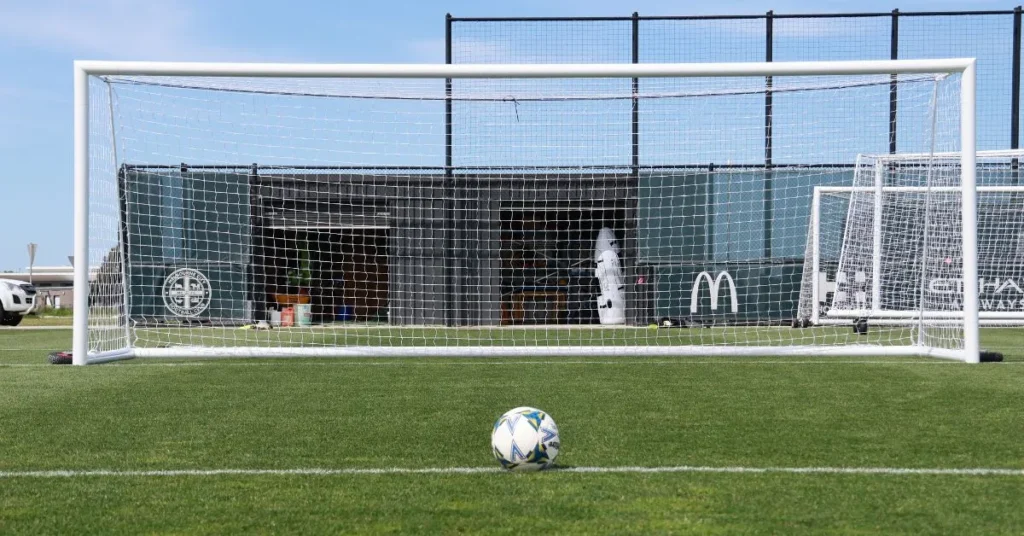
“The addition of the 360 wheels is a strong improvement to what are already, in our view, the best-made portable soccer goals available in the Australian market,” Ian said. “Abel’s goals are locally manufactured in Melbourne, built to a high standard, and supported by responsive after-sales service. Those factors have made it an easy decision to continue working with the Abel team.”
What began as a bespoke fix for a Melbourne City pain point has now been developed into an innovative new product that every Abel customer can benefit from. “The new wheel kit will be made available as an optional upgrade for all our full-size portable soccer goals sold in Australia,” John said.
For Ian, the result is a practical innovation that will make a real difference, everyday. “It is excellent to now see that work translated into a practical, functional product enhancement,” he said. “It is a thoughtful innovation that will make a genuine difference for coaches, grounds teams and venue operators.”