For most Australians, the goalposts are just part of the scenery on game day. For Abel Sports Managing Director John Cann, they’re an obsession, crafted from only the best local products and materials to make Australia’s best goals.
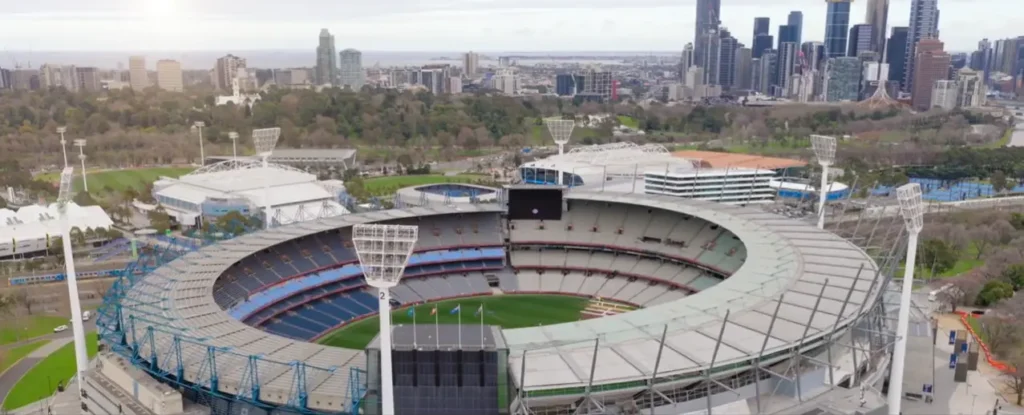
From humble beginnings as a flag pole supplier back in 1992, Abel Sports is now Australia’s leading manufacturer and supplier of goal posts and flags. Today, approximately 70 to 80 per cent of the business is dedicated to sport, with Abel goal posts installed at all the major stadiums around the country including the MCG, SCG, Allianz Stadium, the Gabba, Adelaide Oval and Optus Stadium.
For John, the business itself can be described rather plainly as “an aluminium pole business”. Behind that disarmingly simple description, however, is a highly specialised manufacturing operation and a local supply chain that has been developed and refined over many decades. It is this local know-how and expertise that has become such an essential part of Abel’s success.
“I don’t think goal posts are an issue till they’re not there,” John says. “Suddenly one breaks or the tractor runs into the point post and suddenly they’ve got an issue.”
For major stadiums, there is another challenge. Grounds are increasingly required to accommodate different sporting codes and events, meaning infrastructure needs to be designed with changeovers in mind.
“At the MCG, for example, the AFL goals might have to come down for another code of football,” John explains. “Literally overnight, that ground can be redesigned.”
It is these types of real world demands that has helped shape Abel’s products over the years, from its goal posts and goal storage systems through to the barrier nets used behind the goals.
Abel Sports Project Manager Marty O’Keefe sees first hand how important good design becomes when sporting infrastructure needs to be installed and removed within really tight venue timelines.
When designing a new product, Abel considers how it will be installed, how venue staff will interact with it and how it may need to perform over many years of use.
That same thinking extends from major stadium projects through to local council grounds, schools and community sporting clubs.
Made by Australia for Australia
Although the finished product carries the Abel name, John is quick to point out that manufacturing it involves a much broader group of Australian businesses and skilled workers.
Abel works with local businesses across aluminium extrusion, steel fabrication, welding, engineering, laser cutting and other specialist areas before bringing those components together at its Melbourne facility.
Speaking about Abel’s manufacturing process, John said that “every project… involves a lot of other people”, including geotechnical consultants, local engineers, aluminium suppliers and fabricators.
That local network has become a significant part of how Abel operates.
Capral Aluminium is one of those longstanding suppliers, providing the aluminium extrusion used throughout many Abel products and working collaboratively with the company to develop specialised dies and tooling.
When asked about the relationship with Capral, John said the ability to work directly with a local supplier has been particularly valuable.
“We go to them with our requirements and then we work together to get the dies and the tooling made,” he explained. “We can communicate with any issues, so it becomes a very personal relationship.”
For Abel, that relationship is not simply about purchasing raw material. It allows the company to work through product requirements collaboratively and gives the team confidence in the consistency of what arrives at its Melbourne facility.
“We know we get the quality we want,” John said. “We have never had any issues with quality.”
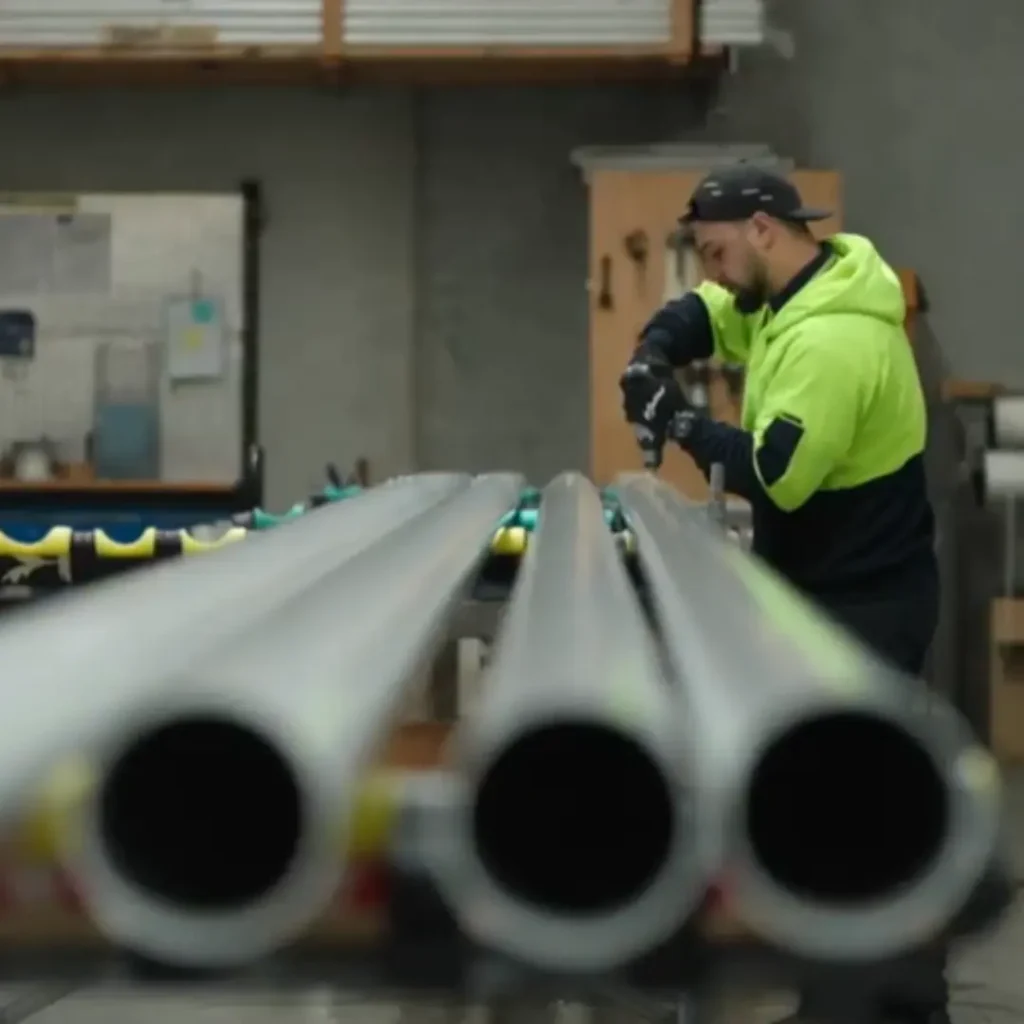
The Abel team working with Capral aluminim to craft professional sporting goals
Why Australian Made is so important to Abel
Competing with imported sporting equipment invariably creates pressure around price, but John believes Abel’s position in the market is based on something different.
“We don’t pretend to be cheap,” he said. “Our big strength is we’re Australian Made, and that’s what we promote.”
For Abel, Australian manufacturing provides other advantages besides premium quality. It allows the business to retain local stock, maintain close relationships with the companies making its components and respond quickly when customers need assistance.
That responsiveness can be particularly important when working with major sporting venues like the MCG. A damaged post at a stadium can’t wait weeks for an imported replacement to arrive.
“If anything goes wrong, anything happens, we’ll replace it, we’ll fix it,” John explained. “We’re with these guys for the lifetime. We’re local. We’ve got local product. We’ve got local suppliers.”
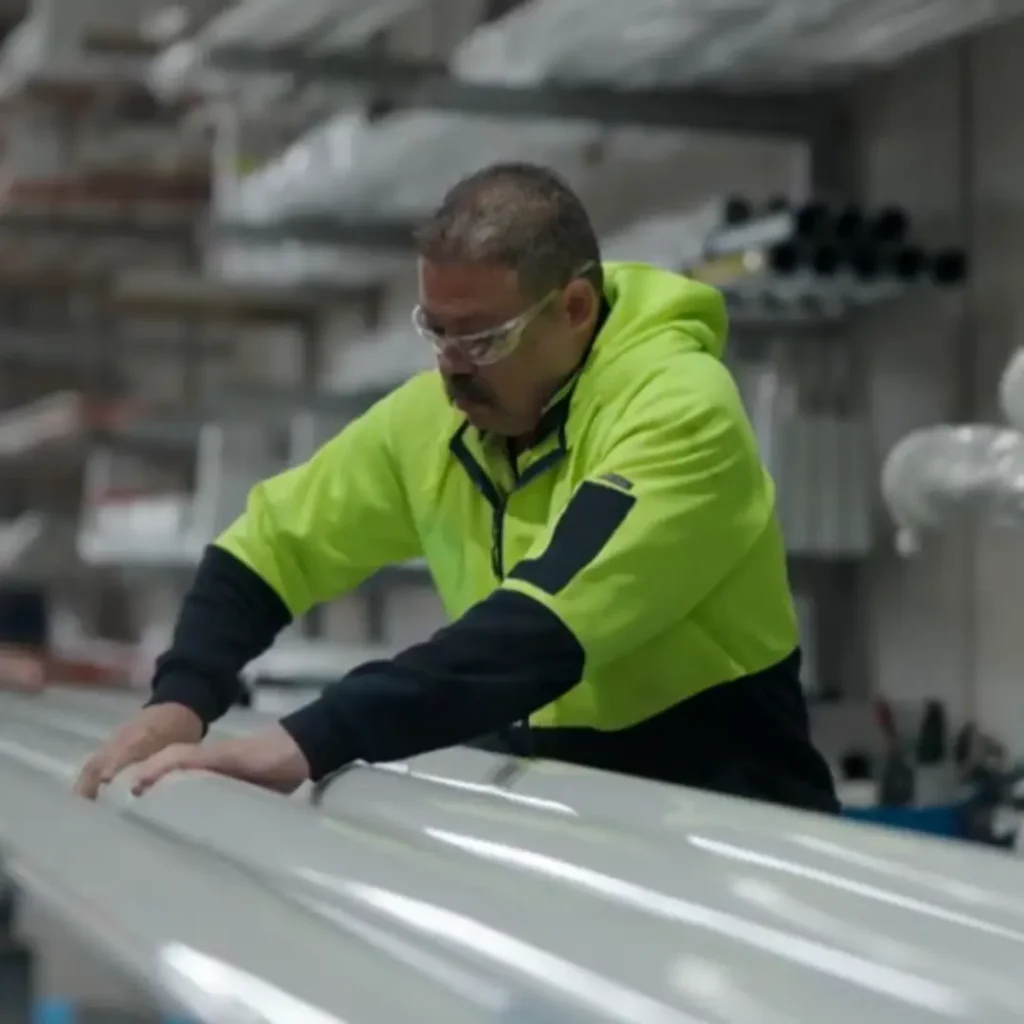
From the local oval to the MCG
That philosophy is reflected particularly strongly in Abel’s longstanding relationship with Capral, which has supplied aluminium extrusions to the business for more than a decade. The partnership extends well beyond material supply, with the two teams working closely on specialised profiles, dies and tooling as new products are developed.
For Abel, relationships like this are a big part of its success. Reliable supply, consistent quality and direct communication all contribute to a stronger and more responsive manufacturing process, better products and premium quality.
We would also like to thank the Capral team for producing this video as part of its Crafted with Capral series and for helping share the Abel story. The video captures not only what we manufacture, but the local expertise, supplier relationships and collaboration that continue to support Abel’s work across sporting facilities throughout Australia.